 Biomega | FirstFitness Nutrition | Whole Leaf Aloe Vera





Biomega
32 Servings
by FirstFitness Nutrition
Retail Price: $45.95
Effective December 1, 2023 FirstFitness Nutrition (FFN) products must be purchased on our FFN Team Member website. Learn why.
 Purchase on FFN

FirstFitness Nutrition Biomega
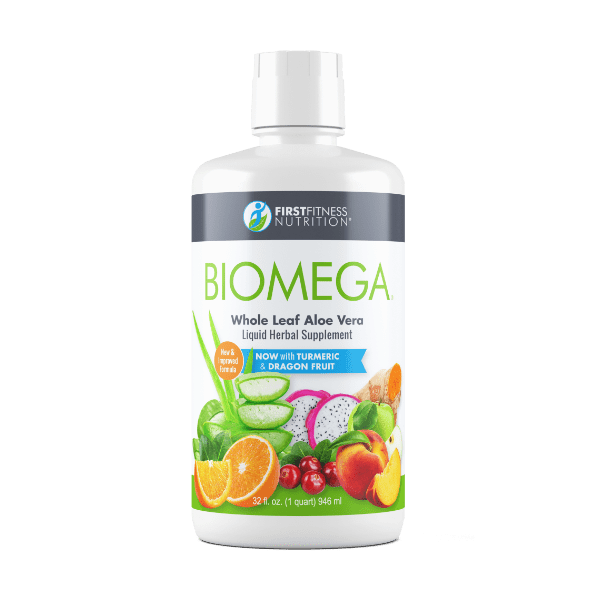
Whole Leaf Aloe Vera with Tumeric & Dragon Fruit*
Contains organic Aloe Vera, fruits, vegetables, antioxidants, and vitamins that help soothe the stomach, enhance nutrient absorption, and support GI health.**
Warning: Array to string conversion in /home/cdndelivery/public_html/php/show_project_brand_product.php on line 840
Array
Warning: include_once(../includes/firstfitness-nutrition-vip-program.php): Failed to open stream: No such file or directory in /home/cdndelivery/public_html/php/show_project_brand_product.php on line 854
Warning: include_once(): Failed opening '../includes/firstfitness-nutrition-vip-program.php' for inclusion (include_path='.:/home/cdnmanagernet/private/') in /home/cdndelivery/public_html/php/show_project_brand_product.php on line 854
-
Description*
 Health & Wellness Products Overview
 5:34
5:34
Lifestyle and Wellness
The typical lifestyle of many Americans today is fast-paced. With a constant on-the-go attitude, resulting in an increasing reliance on convenience and pre-prepared and processed foods, we can often feel stressed and like we don't have time to slow down and address the way that our lifestyles are impacting our health, and consequently, our quality of life. Wellness is a journey comprised of many factors, and addressing even a few, like diet, sleep, and exercise, can have drastic effects on your health. Addressing these wellness decisions become especially prudent when the effects of long-term wellness deficits begin to set in, including weakened immune systems, digestive issues, and inflammation.
What is Biomega?
Biomega is a nutraceutical designed premium liquid nutrition with whole leaf Aloe Vera containing vitamins, macrominerals, botanical extracts, antioxidants, amino acids, and phytonutrients to improve the body's digestive health and enhance the immune system overall. Certified by the International Aloe Science Council, ACTIValoe™, the exclusive combination of ingredients in Biomega is certified for content and purity, ensuring that no unnecessary ingredients are included. The aloe, processed through whole-leaf processing, only removes one component, aloin, which is a minor laxative. The leftover components remain in the Aloe Vera to be used in Biomega as a soothent and lubricant for the intestinal tract, encouraging enhanced absorption and assimilation of nutrients.
Biomega includes organic:
- Aloe Vera
- Spinach
- Broccoli
- Carro
- Sweet Potato
- Orange
- Sunflower Seed
- Shiitake Mushroom
- Maitake Mushroom
Apple Strawberry Biomega also contains organic fruits and vegetables, antioxidants, vitamins, amino acids, and phytonutrients that support digestive health and whole body wellness.*
Benefits of Aloe Vera
Aloe Vera is a medicinal plant that has been used for thousands of years as a treatment for many conditions, most notably for skin conditions. However, there are other uses of Aloe Vera that can have many other beneficial effects on health.
Packed with Nutrients
Aloe Vera is a medicinal plant used in the cosmetic, food, and pharmaceutical industry. Important to its ability to function in these capacities, the gel-like substance of the leaves is key, containing most of the bioactive compounds in the plant, like vitamins, minerals, amino acids (the building blocks of proteins), and antioxidants.1
Antioxidant and antibacterial properties
Aloe Vera contains many powerful antioxidant compounds within the gel of its leaves, and some of these compounds have been shown to also help inhibit the growth of harmful bacteria in the body while leaving the body's good bacteria unharmed.1
Reduces Constipation
Aloe Vera has another property: laxation. Laxatives are substances that loosen stool from the digestive tract or stimulate a bowel movement. Being a laxative, Aloe Vera can also provide relief for constipation and soothing the intestinal tract.
Stabilize Blood Sugar
Aloe Vera, as demonstrated by early evidence in scientific studies, has shown potential in aiding blood sugar management. Ingesting Aloe Vera supplements with the necessary proportions of the plant may be helpful in stabilizing and lowering blood sugar levels in patients who have unstable or elevated blood sugar levels.
Benefits of Biomega
Benefits of Biomega include soothing the stomach, supporting healthy digestion, and enhancing nutrient absorption. Aloe Vera may help to soothe the digestive tract, allowing the more efficient absorption of vital nutrients and an improved ability of the body to eliminate unwanted substances from the body. Biomega may also be useful in producing anti-inflammatory, anti-bacterial, and antiviral effects in the body. Biomega contains vitamins, macrominerals, botanical extracts, antioxidants, amino acids, and phytonutrients, which may help in promoting whole-body wellness, enhance the immune system, aid pain relief, and accelerate wound repair. Finally, through the process of fortification Biomega may help to eliminate free radicals from the body, support cholesterol normalization and blood sugar stability, and provide gastrointestinal support.
Who's Biomega For?
Many of the symptoms of the standard American lifestyle manifest from poor nutritional intake and insufficient sleep, as well as the fast-paced and stressful lifestyle many Americans live. The toll on our immune systems then leads to a myriad of negative effects that can be assisted by easing the intestinal tract. Biomega is ideal for individuals who feel fatigued, suffer from bloating, gas, acid indigestion, and general discomfort after eating, regularly get sick, and struggle with bowel irregularity.
The Bottom Line
Biomega is a premium liquid nutrition with whole leaf Aloe Vera containing vitamins, macrominerals, botanical extracts, antioxidants, amino acids, and phytonutrients to support the body's digestive health and whole-body wellness.* Its whole leaf Aloe Vera helps soothe and lubricate the intestinal tract for proper assimilation and absorption of nutrients, which enhances the immune system, and Biomega's exclusive formulation contains ACTIValoe™, which has been certified by the IASC (International Aloe Science Council) for content and purity.*
Citations:
1 https://www.medicalnewstoday.com/articles/318591#The-bottom-line -
Features*
- Soothes the stomach*
- Supports digestive & immune health*
- Enhances nutrient absorption*
- Vegetarian
- Organic Aloe Vera
- Non-GMO
- Gluten-free
-
Directions
Product ServingSize NumberServings Directions Biomega 1 fl oz 32 Drink 1 oz. of Biomega. Use 1 to 2 times per day. -
Ingredients
Nutrient/Ingredient Amount % Daily ValueDV 1 Calories Calories
When people talk about the calories in food, what do they mean? A calorie is a unit of measurement—but it doesn't measure weight or length. A calorie is a unit of energy. When you hear something contains 100 calories, it's a way of describing how much energy your body could get from eating or drinking it.
KidsHealth from Nemours, https://kidshealth.org/en/kids/calorie.html
15 Sodium Sodium
While sodium (commonly called salt) is vital for healthy nerves and muscles, most of us get too much salt in our diet, often from processed foods. Read food labels to help keep your sodium intake to 2,300 milligrams a day or less. Persons 51 and older, African Americans, or people who have hypertension, diabetes or chronic kidney disease should limit sodium to 1500 milligrams daily.
WebMD, https://www.webmd.com/food-recipes/definitions-glossary
8 mg 1% Total Carbohydrate Total Carbohydrate
This number on a food label indicates how many grams of carbohydrates are in a single serving of a food.
WebMD, https://www.webmd.com/food-recipes/definitions-glossary
3 g 1% Dietary Fiber Dietary Fiber
Dietary Fiber supports digestive regularity, gut microbiome balance, and healthy blood sugar and cholesterol levels.
1 g Total Sugars Total Sugars
This section of the nutrition label lists added and natural sugars separately. Added sugars include sucrose, glucose, fructose, and corn and maple syrups. Natural sugars include lactose in milk and fructose in fruit. If you are concerned about your intake of sugar, be sure added sugars are not one of the first few items in a food's ingredients list.
WebMD, https://www.webmd.com/food-recipes/definitions-glossary
1 g Protein Protein
Protein provides essential amino acids to support muscle repair, immune health, and overall metabolic function.
0 g Vitamin A Vitamin A
Vitamin A supports vision, immune health, and the maintenance of healthy skin and mucous membranes.
178 mcg RAE Vitamin C Vitamin C
Vitamin C is a powerful antioxidant that supports immune health, collagen synthesis, and iron absorption.
17.8 mg Vitamin D Vitamin D
Vitamin D helps maintain bone density and supports immune function by regulating calcium and phosphorus levels.
3.96 mcg Vitamin E Vitamin E
Vitamin E is a fat-soluble antioxidant that protects cell membranes and supports skin and immune health.
2.97 mg Vitamin K1 Vitamin K1
Vitamin K1 supports normal blood coagulation and bone health by assisting in calcium metabolism.
23.73 mcg Thiamin Thiamin
Thiamin (Vitamin B1) supports energy metabolism, nerve function, and glucose utilization.
0.24 mg Riboflavin Riboflavin
Riboflavin (Vitamin B2) supports energy metabolism, red blood cell formation, and antioxidant protection.
0.26 mg Niacin Niacin
Niacin (Vitamin B3) supports energy metabolism, cardiovascular health, and healthy lipid levels.
3.16 mg Pantothenic Acid Pantothenic Acid
Pantothenic Acid (Vitamin B5) supports adrenal function, energy metabolism, and synthesis of coenzyme A.
0.99 mg Vitamin B6 Vitamin B6
Vitamin B6 supports amino acid metabolism, cognitive development, and immune function.
0.34 mg Folate Folate
Folate is a B vitamin important for DNA synthesis, cell division, and prenatal development. It supports cardiovascular and neurological health.
79.11 mcg Biotin Biotin
Biotin is a B vitamin (B7) essential for carbohydrate metabolism, skin, hair, and nail health. It also supports nervous system function.
5.93 mcg Proprietary Aloe Vera, Fruit, and Vegetable Blend
Organic Aloe Barbadensis Leaf Extract, Organic Spinach, Organic Broccoli, Organic Carrot, Organic Sweet Potato, Organic Orange, Organic Apple, Organic Strawberry, Organic Sunflower Seed, ORganic Shitaki Mushroom, and ORganic Maitake Mushroom.28,438.5 mg 1 The % Daily Value tells you how much a nutrient in a serving of food contributes to a daily diet. 2,000 calories a day is used for general nutrition advise.
Fatal error: Uncaught Error: Undefined constant "MEDIA_DIRECTORY" in /home/cdndelivery/public_html/includes/core.php:7324 Stack trace: #0 /home/cdndelivery/public_html/php/show_product_reviews.php(215): displayRatingStars('5', 'FA', '1X') #1 /home/cdndelivery/public_html/php/show_project_brand_product.php(1076): include_once('/home/cdndelive...') #2 /home/cdndelivery/public_html/product/index.php(13): require_once('/home/cdndelive...') #3 /home/cdndelivery/public_html/url-traffic-manager/index.php(201): include('/home/cdndelive...') #4 {main} thrown in /home/cdndelivery/public_html/includes/core.php on line 7324