 Glutenza | NuMedica





Glutenza
60 Vegetable Capsules
by NuMedica
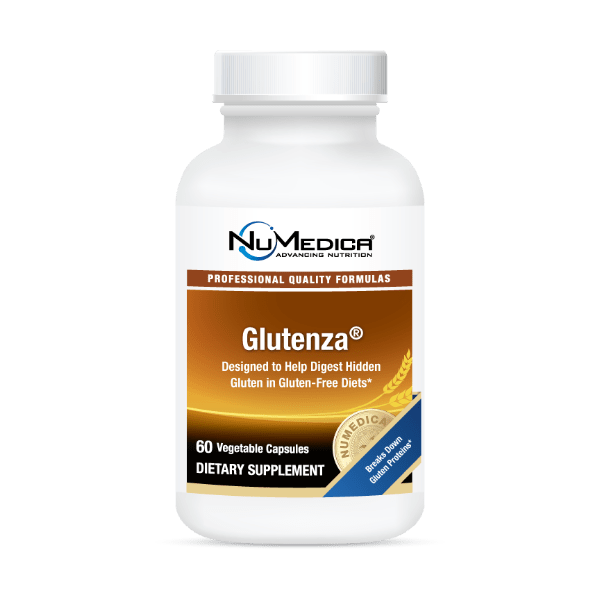
60 Vegetable Capsules
NuMedica Glutenza
Designed to Help Digest Hidden Gluten in Gluten-Free Diets*
NuMedica Glutenza combines targeted enzymes, probiotics, and prebiotics for gluten-focused digestive wellness support within structured digestive routines. Available in 60-capsule size.*
Warning: Array to string conversion in /home/cdndelivery/public_html/php/show_project_brand_product.php on line 840
Array
60 Vegetable Capsules
-
Description*
Gluten-focused digestive support with enzymes, probiotics, and prebiotics
NuMedica Glutenza is a specialized digestive-support formula designed to support the breakdown of gluten proteins as part of broader digestive wellness routines. The formula combines targeted proteolytic enzymes, probiotics, and prebiotics within a digestive-support structure focused on gluten-related digestive wellness.
Unlike broad-spectrum digestive enzyme formulas designed for general meal digestion, Glutenza is positioned more specifically around digestive wellness practices involving gluten-containing foods and gluten-related protein digestion support.
The formula incorporates enzyme activity, probiotic organisms, and prebiotic support commonly discussed within digestive wellness routines centered around gluten digestion, digestive balance, and broader intestinal-support practices.
Glutenza is best understood as a specialized gluten-focused digestive-support formula intended for structured digestive wellness routines.
Glutenza fits within the category of protein and gluten digestive-support formulas, which are designed to support the breakdown of gluten proteins and peptides during digestion while also supporting broader intestinal wellness routines.
How gluten-focused digestive-support formulas are commonly used
Gluten-focused digestive-support formulas are often incorporated into digestive wellness routines centered around gluten-containing meals, digestive comfort, and broader digestive-support practices involving specialized enzyme supplementation.
These products are commonly selected by individuals looking for digestive support beyond generalized meal-digestion formulas, especially within routines involving gluten-related digestive wellness support.
Protein-focused digestive-support formulas are typically used differently from stomach acid-support products, broad-spectrum digestive enzymes, or probiotic-only formulas because their role centers more specifically around protein and gluten digestion support.
What makes Glutenza different
Glutenza focuses specifically on gluten-related digestive support rather than generalized digestive enzyme supplementation or upper-digestion support.
The formula combines targeted proteolytic enzymes with probiotic and prebiotic support in a digestive-support structure centered around gluten proteins and gluten-related peptides.
Unlike generalized digestive enzyme formulas designed primarily around fats, carbohydrates, and mixed meals, Glutenza is positioned more specifically around digestive wellness routines involving gluten-containing foods.
Compared to probiotic-only formulas, Glutenza incorporates digestive enzymes alongside probiotic and prebiotic support rather than focusing exclusively on microbiome supplementation.
Glutenza compared to All-Genza
Both Glutenza and All-Genza support protein digestion and digestive wellness routines, but the products are structured around different digestive-support approaches.
Glutenza All-Genza Primary emphasis Gluten-focused digestive support Broader protein-digestion support Digestive focus Gluten and gluten-related peptide digestion General protein and peptide digestion Formula structure Gluten-focused enzyme blend with probiotics and prebiotics Protein-digestion enzyme blend with probiotics and prebiotics Commonly selected for Gluten-oriented digestive-support routines Broader protein-digestion wellness routines Overall positioning More specialized gluten-focused support Generalized protein-focused support These products support digestion differently. Glutenza is structured more specifically around digestive wellness routines involving gluten-containing foods, while All-Genza is positioned around broader protein digestion support.
Glutenza compared to Pan-V
Both Glutenza and Pan-V support digestion through enzyme supplementation, but the products are structured around different digestive goals.
Glutenza Pan-V Primary emphasis Gluten-focused digestive support Broad-spectrum digestive enzyme support Digestive focus Gluten and protein digestion support Protein, fat, carbohydrate, fiber, and lactose digestion Additional support Includes probiotics and prebiotics Enzyme-focused formula Formula style Specialized gluten-focused approach Generalized meal-digestion approach Commonly selected for Gluten-focused digestive wellness routines Everyday digestive enzyme supplementation These products support different digestive goals: targeted gluten-focused digestive support versus generalized digestive enzyme support for mixed meals.
Which digestive-support categories are commonly explored for different routines?
Digestive-support category Often explored products Upper digestion support Pepcigen HCL Pancreatic digestive enzyme support Pan-GL Vegetarian digestive enzyme support Pan-V Protein and gluten digestive support All-Genza, Glutenza Intestinal lining and GI support GlutaMed, L-Glutamine Probiotic and microbiome support Tri-Flora Plus, HiFlora-50, SacBoulardii Intestinal flora and microbial-environment support Caprylic Acid, CandideX, ParasideX Histamine-food digestive support HistaMend DAO Comprehensive gluten-support wellness systems Gluten Support Packets Where Glutenza fits in everyday routines
Glutenza is typically incorporated into structured digestive wellness routines centered around gluten-containing meals, digestive balance, and broader digestive-support practices involving specialized enzyme supplementation.
The formula structure may appeal to individuals looking for digestive-support products that combine gluten-focused digestive enzymes with probiotic and prebiotic support.
Because the formula emphasizes gluten-related digestive support, it occupies a different category than products focused primarily on stomach acid support, broad-spectrum digestive enzymes, probiotic-only supplementation, or intestinal lining support.
Who this product is typically considered for
- Individuals looking for gluten-focused digestive support
- People building structured digestive wellness routines
- Adults focused on digestive wellness associated with gluten-containing meals
- Users seeking digestive-support formulas combining enzymes, probiotics, and prebiotics
- Those looking for more specialized digestive support beyond generalized digestive enzyme formulas
What this product is not designed to replace
Glutenza is not designed to replace individualized dietary approaches or broader lifestyle practices that contribute to long-term digestive wellness.
It is best understood as a specialized digestive-support supplement intended to complement a larger digestive wellness-focused routine.
This product is not intended to replace a gluten-free diet and is not suitable to treat or prevent celiac disease.
A specialized gluten-focused digestive-support approach
NuMedica Glutenza provides targeted proteolytic enzymes alongside probiotics and prebiotics in a formula designed for gluten-focused digestive wellness support within broader digestive wellness routines. Its role centers on supporting structured digestive-support practices associated with gluten-containing meals as part of long-term digestive wellness routines.
-
Features*
-
Directions
Size: 60 Vegetable Capsules
Serving Size: 1 Capsule
Servings Per Container: 60
Directions: Take one capsule up to three times per day before a meal or as directed by your healthcare practitioner. Store refrigerated.
-
Ingredients
Nutrient/Ingredient Amount % Daily ValueDV 1 One Capsules Contain:
Proprietary Multi-Enzyme Blend 250 mg Endo-peptidase (75,000 HUT) Endo-peptidase
Endo-peptidase is an enzyme that breaks proteins into smaller peptides, supporting digestion and amino acid absorption in the gastrointestinal tract.
Protease (500 SAPU) Protease
Protease is an enzyme that breaks down proteins into peptides and amino acids to support digestion and nutrient absorption.
Exo-peptidase (125 DPPIV) Exo-peptidase
Exo-peptidase is a digestive enzyme that breaks down peptides into individual amino acids, enhancing protein digestion and nutrient absorption.
Probiotic Blend (5.0 Billion CFU) 70 mg Saccharomyces boulardii lyo (strain CNCM I-3799) Saccharomyces boulardii lyo
Saccharomyces boulardii lyo is a probiotic yeast that supports gastrointestinal balance and immune function.
Bacillus subtilis (strain DE111®) Bacillus subtilis
Bacillus subtilis is a soil-based probiotic that supports gut health, digestive enzyme activity, and a balanced microbiome. It is known for its spore-forming resilience.
Lactobacillus acidophillus (strain ATC# SD5212) Lactobacillus acidophillus
Lactobacillus acidophillus is a probiotic strain that supports gut flora balance, digestion, and immune system function.
Proprietary Prebiotic Blend† LH01 - Myoviridae, LL5 - Siphoviridae, T4D - Myoviridae, LL12 - Myoviridae 7.5 mg 1 The % Daily Value tells you how much a nutrient in a serving of food contributes to a daily diet. 2,000 calories a day is used for general nutrition advise. -
Related Content*
 Additional Resources
We encourage you to take advantage of these related Wellness Resources on our website.
 Help for Gluten-Free & Dairy-Free Living
People often explore gluten-free or dairy-free eating when certain foods consistently affect digestion, skin, or energy. These patterns can feel easier to manage when the focus stays on simple ingredients and steady routines rather than on specialized products. The goal is not to create a rigid diet but to understand how different foods influence comfort and overall well-being.
So What's The Big Deal About Gluten?Is Gluten Bad? Gluten just is. The problem is, it generally is not being used in the correct proportions any more. So let's take a moment to explore what gluten really is.
Understanding Celiac Disease and the Relationship to Gluten SensitivityCeliac disease occurs for some people who have a problem processing gluten, which is a protein found in many foods. The gluten triggers an immune response that is not normal and damages the inside of the small intestine. Once that happens it is difficult to absorb the nutrients needed from the foods eaten.
Understanding Metabolic Dysfunction and How to Address It NaturallyMetabolic dysfunction often develops quietly &- years before a diagnosis &- undermining energy, mood, weight, and long-term health. This guide clarifies what metabolic dysfunction is, how it differs from metabolic syndrome, and how to restore balance via lifestyle steps and osteopathic principles.
Webinar: Four Letter Word for F.O.O.D.Facilitator Libby Wright discusses the unhealthy types of food typically consumed in the S.A.D (Standard American Diet) with participants of the Your Best Weight online education program. She provides alternative food choices and recipes that are nutritious and taste great along with supplement recommendations including meal replacement protein shakes. The webinar last for 17 minutes and addresses questions submitted by the program participants.
What Can You Eat on a Dairy-Free Foods Diet?The average American eats just under two cups of dairy products every day. But you're not the average American.
Instead, you've decided to forego dairy products. It could be that you're one of the 50 million people in the United States who is lactose intolerant. Or, you might just want to skip dairy for ethical or personal reasons.
When Did Food Become Our Enemy?It could be that the primary key to health and wellbeing lay within our gastrointestinal tract. With obesity and childhood behavioral disorders at seemingly epidemic levels and our "healthcare" system lacking answers, where do we turn?
Why is Eating Healthy So Hard?Why is maintaining a healthy diet and lifestyle so tricky? What everyday factors are hindering our progress in eating well every day? We will break down the reasons your diet may be failing you and what you can do about it.
Why You Should Care About Gut HealthYour gut plays a larger role in daily health than most people realize. It influences digestion, nutrient absorption, immune readiness, inflammation patterns, energy, mood, and even how clearly you think. When the gut is working well, many other systems work more smoothly. When it struggles, its effects appear across the body, easy to overlook unless you know what to watch for.

Fatal error: Uncaught Error: Undefined constant "MEDIA_DIRECTORY" in /home/cdndelivery/public_html/includes/core.php:7324 Stack trace: #0 /home/cdndelivery/public_html/php/show_product_reviews.php(215): displayRatingStars('5', 'FA', '1X') #1 /home/cdndelivery/public_html/php/show_project_brand_product.php(1076): include_once('/home/cdndelive...') #2 /home/cdndelivery/public_html/product/index.php(13): require_once('/home/cdndelive...') #3 /home/cdndelivery/public_html/url-traffic-manager/index.php(201): include('/home/cdndelive...') #4 {main} thrown in /home/cdndelivery/public_html/includes/core.php on line 7324