 Total Vegan Protein | NuMedica - Chocolate, Espresso & Vanilla





Total Vegan Protein
Chocolate - Espresso - Vanilla
by NuMedica
14 Servings
by NuMedica
14 Servings
by NuMedica
14 Servings
by NuMedica
NuMedica Total Vegan Protein
Plant-based protein for everyday dietary use*
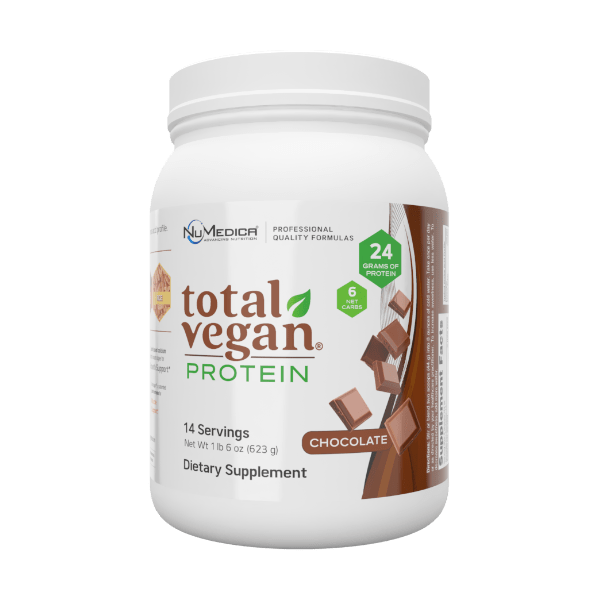
NuMedica Total Vegan Protein provides 24 grams of plant-based protein per serving from a multi-source vegan protein blend for fitness, meal support, and wellness-focused routines. Available in Chocolate, Espresso, and Vanilla flavors.*
Warning: Array to string conversion in /home/cdndelivery/public_html/php/show_project_brand_product.php on line 840
Array
14 Servings
by NuMedica
14 Servings
by NuMedica
14 Servings
by NuMedica
-
Description*
Plant-based protein designed for everyday routines
NuMedica Total Vegan Protein is a plant-based protein drink mix designed for individuals who want a dairy-free protein option that fits into consistent daily routines. It provides 24 grams of protein per serving from a blend of pea, rice, hemp, chia, and cranberry proteins.
Products like Total Vegan are typically used to help supplement protein intake when meals, schedules, appetite, or food preferences make consistent protein consumption more difficult. Rather than functioning as a complete meal replacement, this type of formula is generally used alongside broader eating patterns as a convenient source of supplemental protein.
Total Vegan is commonly chosen by individuals who prefer plant-based products or who want an alternative to whey-based protein powders.
Understanding where protein powders fit
Protein powders and meal-replacement shakes are often grouped because they can appear similar in format. In practice, they are usually structured for different purposes.
Total Vegan is primarily positioned as a protein supplement rather than a complete meal replacement. While some individuals may use a shake in place of a meal from time to time for convenience or scheduling, this product is not designed to replicate the broader nutritional profile of a balanced meal fully.
At 160 calories per serving with 24 grams of protein, Total Vegan is built around concentrated protein intake rather than complete meal composition. Many meal-replacement products contain higher calorie levels, a broader macronutrient distribution, and more extensive vitamin and mineral fortification, intended to stand in for a meal more closely.
This distinction is important because protein supplements are generally intended to complement existing eating patterns rather than replace food entirely on a long-term basis.
Multi-source plant protein blend
Total Vegan uses a blend of yellow pea, rice, hemp, chia, and cranberry proteins. Multi-source plant protein formulas are commonly designed to provide a broader amino acid profile while maintaining smoother texture and better overall mixability than many single-source proteins.
The formula also includes additional ingredients commonly associated with broader wellness-focused protein products, including digestive enzymes, amino acids, broccoli seed extract, calcium d-glucarate, MCTs, and trace mineral support.
These additions position Total Vegan as a more comprehensive plant-based protein formula while still maintaining its primary role as a protein supplement.
Available flavors
Total Vegan is available in Chocolate, Espresso, and Vanilla:
- Chocolate - cocoa-based flavor profile
- Espresso - coffee-inspired flavor with mild natural caffeine content
- Vanilla - neutral flavor suitable for blending and smoothies
Choosing between plant-based and whey protein
Protein powders are often selected based on dietary preference, ingredient tolerance, routine style, and desired protein source.
- Total Vegan - plant-based protein blend designed for flexible everyday use
- SlimFit Protein - whey-based protein formula centered more directly around traditional whey protein supplementation
Comparison
Total Vegan SlimFit Protein Primary protein source Plant-based blend Whey protein blend Protein per serving 24 g 24 g Calories per serving 160 160 Routine emphasis Flexible plant-based protein support Traditional whey protein supplementation Commonly selected for Dairy-free preferences and plant-based routines Whey-based protein routines Meal replacement positioning Protein supplement, not a complete meal replacement Protein supplement, not a complete meal replacement How it is commonly used
Total Vegan is commonly used once daily or as needed to help supplement protein intake. It may be mixed with water, blended into smoothies, or incorporated into broader meal and snack routines.
Some individuals also combine products like this with foods such as fruit, oats, nut butters, or seeds to create a more substantial smoothie or snack. In those situations, the protein powder functions as one component within a larger meal structure rather than acting as the meal itself.
Who this product is typically considered for
- Preferring plant-based protein sources
- Avoiding dairy due to preference or tolerance
- Looking for a convenient supplemental protein option
- Wanting a protein powder that fits flexible daily routines
- Using protein supplements alongside meals rather than as complete meal replacements
What this product is not designed to replace
Total Vegan is not designed to replace whole foods, balanced meals, or an overall dietary pattern. While protein supplements can help support convenience and consistency, they are generally intended to complement broader eating habits rather than fully substitute for them.
This type of formula is best understood as a supplemental protein product intended to fit within a larger daily routine.
A flexible plant-based protein option
Total Vegan provides a straightforward way to incorporate plant-based protein into everyday life. Its combination of multiple protein sources and additional functional ingredients makes it suitable for individuals seeking a dairy-free protein supplement that can be used consistently and flexibly over time.
-
Features*
-
Directions
Product ServingSize NumberServings Total Vegan Protein (All Flavors) 2 Scoops (44.5 g) 14 Directions: Stir or blend two scoops (44.5 g) into 8 ounces of cold water. Take once per day or as directed by your healthcare practitioner. To increase sweetness, use less water. To decrease sweetness, add more water.
CONTENTS SOLD BY WEIGHT NOT VOLUME. Some settling may occur during shipping and handling. The amount of product contained in 2 scoops may be above or below 44.5 grams due to variations in handling and product density.
-
Ingredients
Nutrient/Ingredient Amount % Daily ValueDV 1 Broccoli Seed Extract (Brassica oleracea L. italica) (seed) extract Broccoli Seed Extract
Broccoli Seed Extract contains sulforaphane and other compounds that support detoxification, antioxidant activity, and cellular health.
300 mg 2 Scoops (44.5 g) Contain:
Calcium Calcium
Calcium is an essential mineral needed for bone density, muscle contraction, nerve signaling, and overall structural support.
120 mg Calcium D-Glucarate Calcium D-Glucarate
Calcium D-Glucarate supports detoxification processes, particularly the elimination of excess hormones and toxins through liver pathways.
200 mg Calories Calories
When people talk about the calories in food, what do they mean? A calorie is a unit of measurement—but it doesn't measure weight or length. A calorie is a unit of energy. When you hear something contains 100 calories, it's a way of describing how much energy your body could get from eating or drinking it.
KidsHealth from Nemours, https://kidshealth.org/en/kids/calorie.html
160 Iron Iron
Iron is a vital mineral for oxygen transport, energy production, and red blood cell formation. Essential for preventing fatigue and anemia.
8 mg L-Glutamine L-Glutamine
L-Glutamine is a conditionally essential amino acid that supports gut health, muscle recovery, and immune function.
500 mg L-Taurine L-Taurine
L-Taurine is a conditionally essential amino acid that supports cardiovascular health, electrolyte balance, and nervous system function.
250 mg Magnesium Magnesium
Magnesium is a vital mineral involved in muscle function, bone health, energy production, and nerve signaling.
35 mg Manganese Manganese
Manganese is a trace mineral essential for bone development, metabolism, and antioxidant enzyme function.
0.25 mg Potassium Potassium
Potassium is an essential mineral that supports fluid balance, muscle contraction, and nerve transmission.
160 mg Protein Protein
Protein provides essential amino acids to support muscle repair, immune health, and overall metabolic function.
24 g Sodium Sodium
While sodium (commonly called salt) is vital for healthy nerves and muscles, most of us get too much salt in our diet, often from processed foods. Read food labels to help keep your sodium intake to 2,300 milligrams a day or less. Persons 51 and older, African Americans, or people who have hypertension, diabetes or chronic kidney disease should limit sodium to 1500 milligrams daily.
WebMD, https://www.webmd.com/food-recipes/definitions-glossary
350 mg Total Carbohydrate Total Carbohydrate
This number on a food label indicates how many grams of carbohydrates are in a single serving of a food.
WebMD, https://www.webmd.com/food-recipes/definitions-glossary
12 g Dietary Fiber Dietary Fiber
Dietary Fiber supports digestive regularity, gut microbiome balance, and healthy blood sugar and cholesterol levels.
4 g Total Sugars Total Sugars
This section of the nutrition label lists added and natural sugars separately. Added sugars include sucrose, glucose, fructose, and corn and maple syrups. Natural sugars include lactose in milk and fructose in fruit. If you are concerned about your intake of sugar, be sure added sugars are not one of the first few items in a food's ingredients list.
WebMD, https://www.webmd.com/food-recipes/definitions-glossary
4 g Includes 4 g Added Sugars Xylitol Xylitol
Xylitol is categorized as a sugar alcohol. Chemically, sugar alcohols combine traits of sugar molecules and alcohol molecules. Their structure allows them to stimulate the taste receptors for sweetness on your tongue. Xylitol is found in small amounts in many fruits and vegetables and is therefore considered natural. Humans even produce small quantities of it via normal metabolism.
https://www.healthline.com/nutrition/xylitol-101#what-it-is
2 g Total Fat Total Fat
This number on a food label indicates how much fat is in a single serving of a food. Limit total fat to less than 25% to 35% percent of the calories you consume each day. All fats have 9 calories per gram.
WebMD, https://www.webmd.com/food-recipes/definitions-glossary
3 g 1 The % Daily Value tells you how much a nutrient in a serving of food contributes to a daily diet. 2,000 calories a day is used for general nutrition advise. -
Questions*
 Questions
If you have a question not answered on this page, please consider submitting it in the Product Questions or Feedback section in the Discussion Forum below.
 What is Total Vegan used for?
Total Vegan is used to support daily protein intake when meals do not consistently provide enough protein. It is typically added to a routine as a convenient, plant-based protein source.
Is Total Vegan a complete protein?
Total Vegan uses a blend of plant proteins including pea, rice, hemp, chia, and cranberry. This multi-source approach is commonly used to provide a broader range of amino acids compared to a single plant source.
Does Total Vegan replace meals?
No. Total Vegan is intended to complement meals, not replace them. It is typically used alongside normal eating patterns to help maintain consistent protein intake.
How is this different from whey protein?
Total Vegan is entirely plant-based, while whey protein is derived from dairy. The choice usually comes down to dietary preference, tolerance, and how someone structures their routine.
When is Total Vegan typically used?
It is commonly used once daily or as needed, often mixed with water or added to smoothies. Timing is flexible and based on individual routine.
Who is this best suited for?
This product is typically chosen by those who prefer plant-based nutrition, avoid dairy, or want a simple and flexible protein option.
Who may prefer a different option?
Those who tolerate dairy and want a more structured, whey-based formula may prefer SlimFit Protein.
-
Related Content*
Additional Resources
We encourage you to take advantage of these related Wellness Resources on our website.
 10 Reasons Why Lean Body Mass is Important
One of the best ways to reduce fat and stay healthy is to build lean body mass. As we age, our muscle mass starts to decline rapidly, leading to physical and cognitive deterioration. Due to the rapid decline in muscle mass, most of us begin to gain fat easier as we age.
Going Vegan: Untold Health Benefits of a Vegan DietThe trend towards a vegan diet has been popular for years. Going vegan has numerous health benefits and presents an opportunity to learn more about nutrition and cooking. Want to learn more about how going vegan can help you improve your health and live longer? Keep on reading.
Healthy Grocery Shopping: What to Buy and WhyGrocery shopping shapes what ends up on the table day after day. Many people notice that when their cart leans toward whole foods instead of ultra-processed items, they feel steadier energy, better digestion, and a clearer sense of control over their health. The aim is not perfection, but a pattern: more real ingredients, fewer engineered products, and meals that are realistic to cook in a busy week.
Help for Gluten-Free & Dairy-Free LivingPeople often explore gluten-free or dairy-free eating when certain foods consistently affect digestion, skin, or energy. These patterns can feel easier to manage when the focus stays on simple ingredients and steady routines rather than on specialized products. The goal is not to create a rigid diet but to understand how different foods influence comfort and overall well-being.
How To Regulate Triglyceride Levels To Maintain Healthier Blood PressureThere are several lifestyle changes you can make to help maintain healthier blood pressure. In this article, we'll cover some common ways for regulating Triglyceride Levels and ensuring you maintain healthy blood pressure levels.
Lifestyle Choices, Nutrition & Quality SupplementsThink back to the time of your great-grandparents. What types of food did people eat back then? For the most part they ate what they could grow on their land or what they got locally from a Farmer's market or some other community-based food supply. So what happened to our food? Why are so many of us sick, overweight and tired?
Quick Healthy SnacksToday I'd like to remind you that it's easy to do something healthy for yourself. Especially in the snacking department!
Shake Up Your LifestyleLooking for convenient, refreshing and healthy beverage options to quench your thirst and provide your body with the nutrients it needs for optimal performance?
Look no further. Try these NuMedica shake recipes that use whole natural foods in combination with their most popular professional wellness formulas.
The Anti-Inflammatory Diet: Combating Chronic Inflammation with Nutrient-Rich FoodsInflammation is a natural process in the body that helps fight infection and heal injuries. However, chronic inflammation can lead to various health issues, including heart disease, diabetes, and arthritis. An anti-inflammatory diet, focusing on foods that reduce inflammation and oxidative stress, can significantly enhance your body's health. This blog post will explore how sustainable eating habits can support your body's healing processes and reduce inflammation.
Vegetarian Diet Versus Pescatarian Diet - Which is Better?No one knows your nutritional needs better than you do. Learning to be the healthiest version of yourself means finding a diet that makes you feel good - energized, refreshed, and happy. If you are considering changing your diet to lose weight, get healthier, or prevent chronic disease there are lots of options to choose from. Two of the most popular, easy-to-follow diet choices are the vegetarian diet and the pescatarian diet.
What Amino Acids Are and How They Are Commonly UnderstoodAmino acids are commonly described as the building components of protein. They are present in both plant and animal foods and participate in many ongoing processes within the body.
What Colostrum and PRPs Are and How They're Commonly UsedColostrum and proline-rich polypeptides (PRPs) are often discussed in relation to immune health, gut integrity, and recovery. They are naturally occurring compounds found in early milk and are typically grouped because of how they are used in supplement routines. In everyday health discussions, they are less about single outcomes and more about how the body adapts and maintains balance over time.
Whole Foods Plant-Based (WFPB) DietHow many times have you jumped on-board the diet train with high hopes of weight loss and improved health, only to discover limited food choices, difficulty staying on-track, and few measurable health benefits? Diet fads come and go, but one - the whole foods, plant-based diet (WFPB)- isn't a fad.
Why You Should Care About Gut HealthYour gut plays a larger role in daily health than most people realize. It influences digestion, nutrient absorption, immune readiness, inflammation patterns, energy, mood, and even how clearly you think. When the gut is working well, many other systems work more smoothly. When it struggles, its effects appear across the body, easy to overlook unless you know what to watch for.

Fatal error: Uncaught Error: Undefined constant "MEDIA_DIRECTORY" in /home/cdndelivery/public_html/includes/core.php:7324 Stack trace: #0 /home/cdndelivery/public_html/php/show_product_reviews.php(215): displayRatingStars('5', 'FA', '1X') #1 /home/cdndelivery/public_html/php/show_project_brand_product.php(1076): include_once('/home/cdndelive...') #2 /home/cdndelivery/public_html/product/index.php(13): require_once('/home/cdndelive...') #3 /home/cdndelivery/public_html/url-traffic-manager/index.php(201): include('/home/cdndelive...') #4 {main} thrown in /home/cdndelivery/public_html/includes/core.php on line 7324